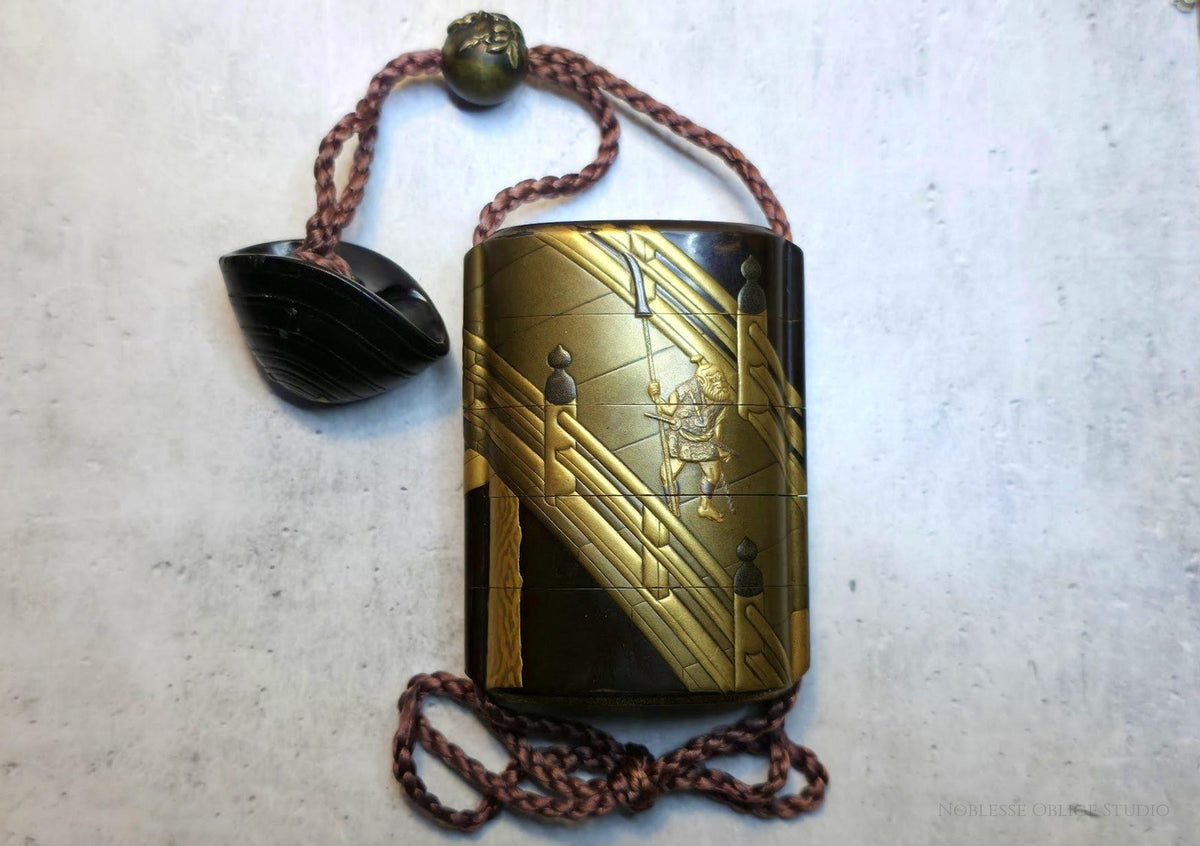
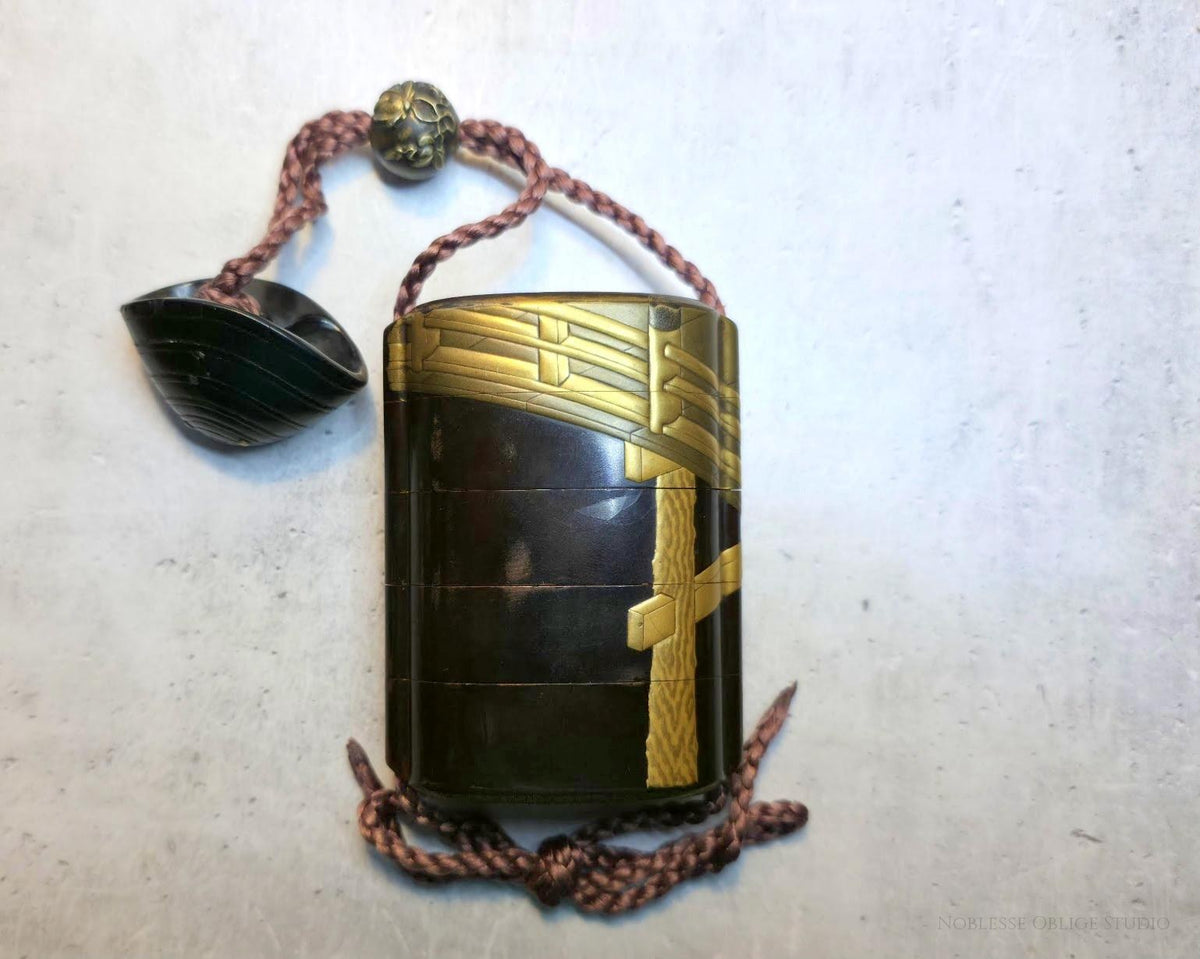
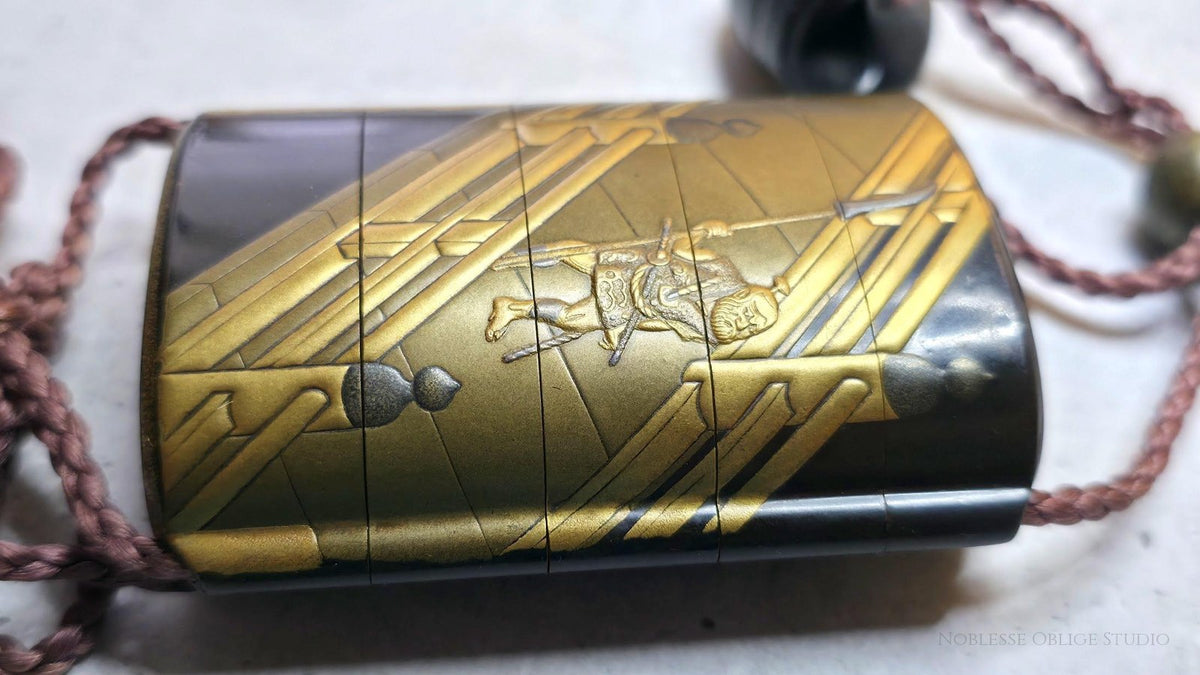
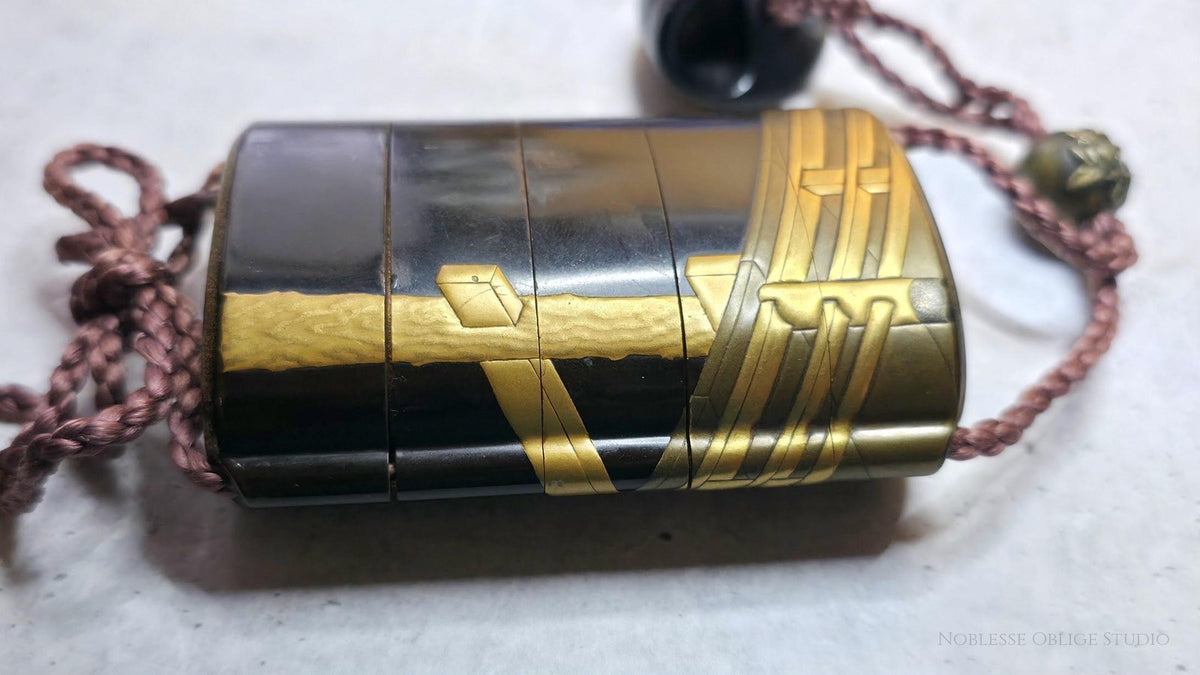
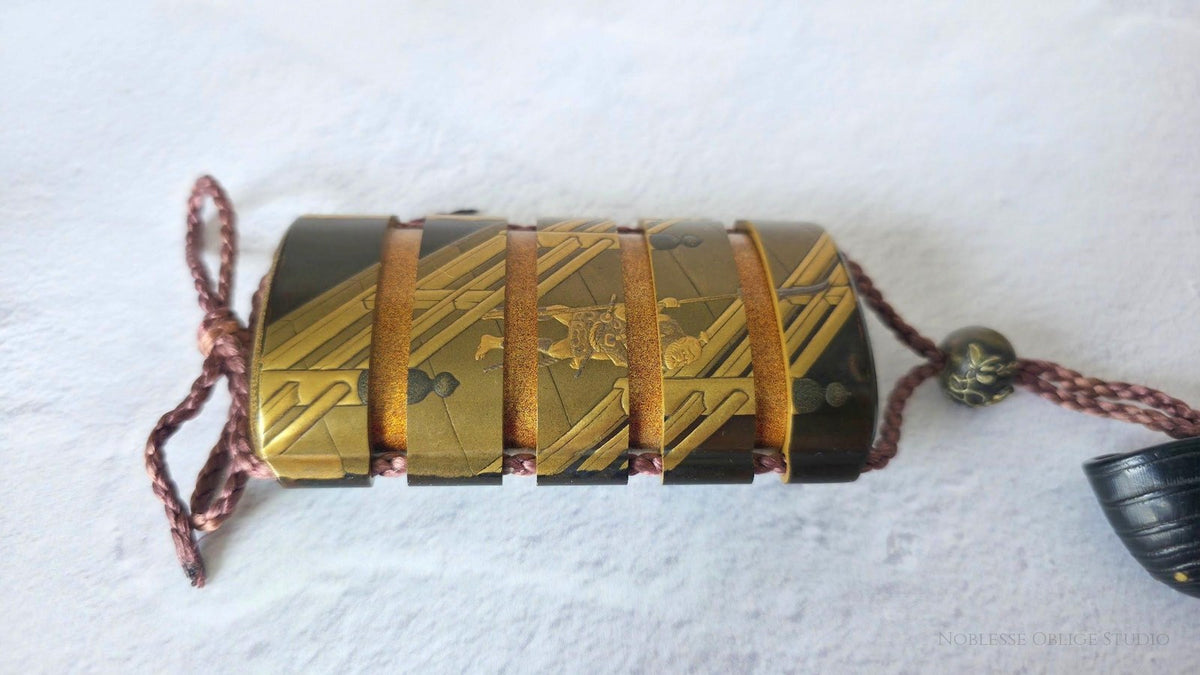
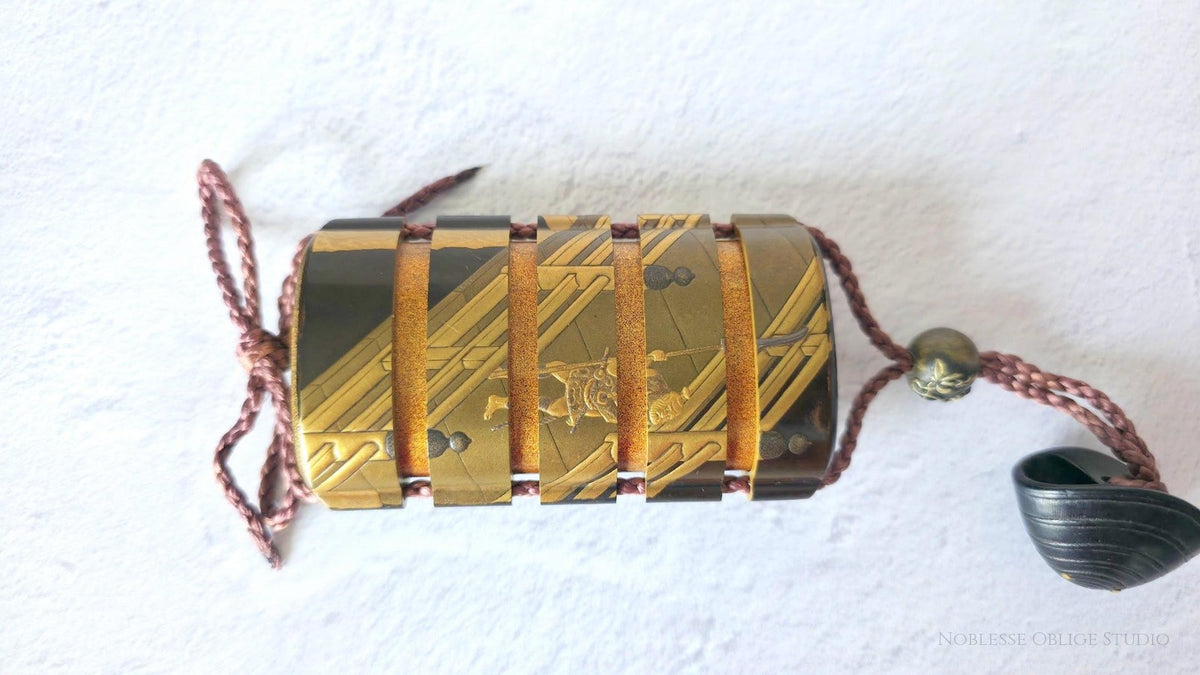
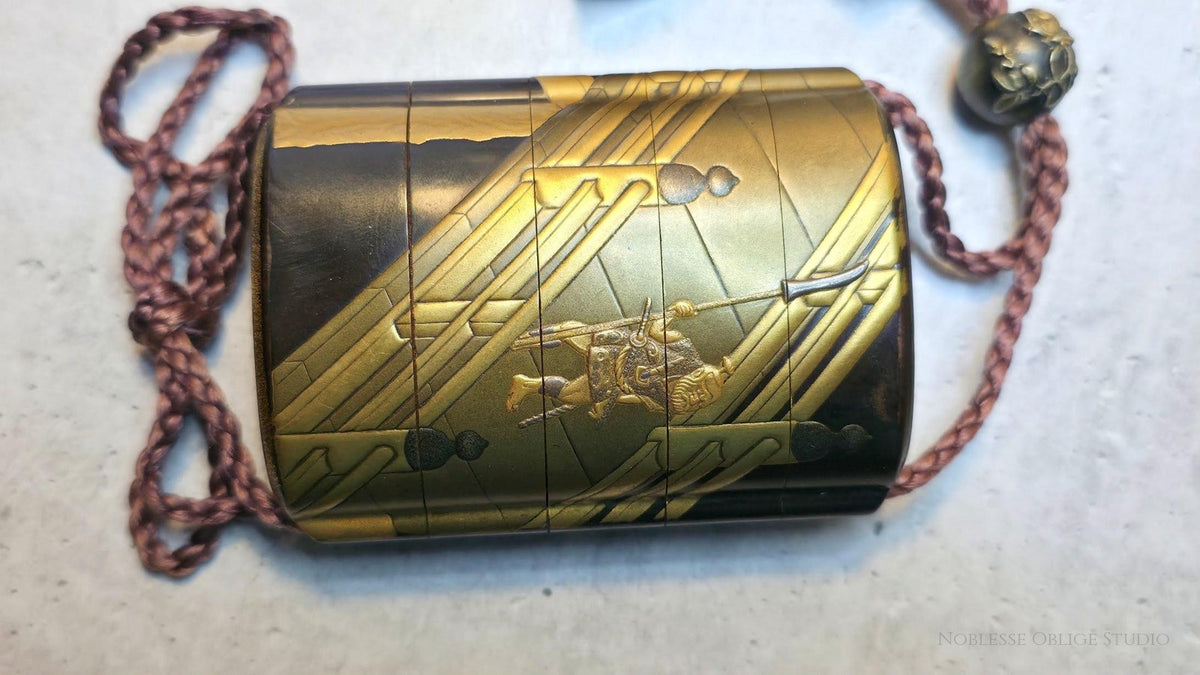
A refined five-case Japanese inrō from the late Edo to early Meiji period (circa 1800–1880), executed in deep black urushi lacquer and decorated with an elaborate narrative scene in gold maki-e.
An inrō is a traditional Japanese personal container, worn suspended from the sash (obi) of a kimono. Because traditional garments had no pockets, small items such as seals or medicines were carried inside these tiered cases. Over time, inrō evolved into refined miniature works of art, often owned by wealthy townsmen and members of the samurai class as both practical objects and subtle expressions of taste and status.
The design unfolds continuously around the surface, depicting the celebrated encounter on a bridge between the warrior monk Benkei and the young warrior Minamoto no Yoshitsune—an iconic episode from Japanese history and literature symbolizing strength, humility, and destiny.
The decoration is carried out in togidashi maki-e (polished maki-e), a sophisticated lacquer technique in which gold is applied beneath layers of lacquer and subsequently polished to achieve a unified, luminous surface. Multiple tones of gold—warm yellow, muted, and greenish-gold—are skillfully employed to enhance depth and movement. Fine engraving and subtle relief work are particularly evident in the rendering of the figures and architectural elements of the bridge.
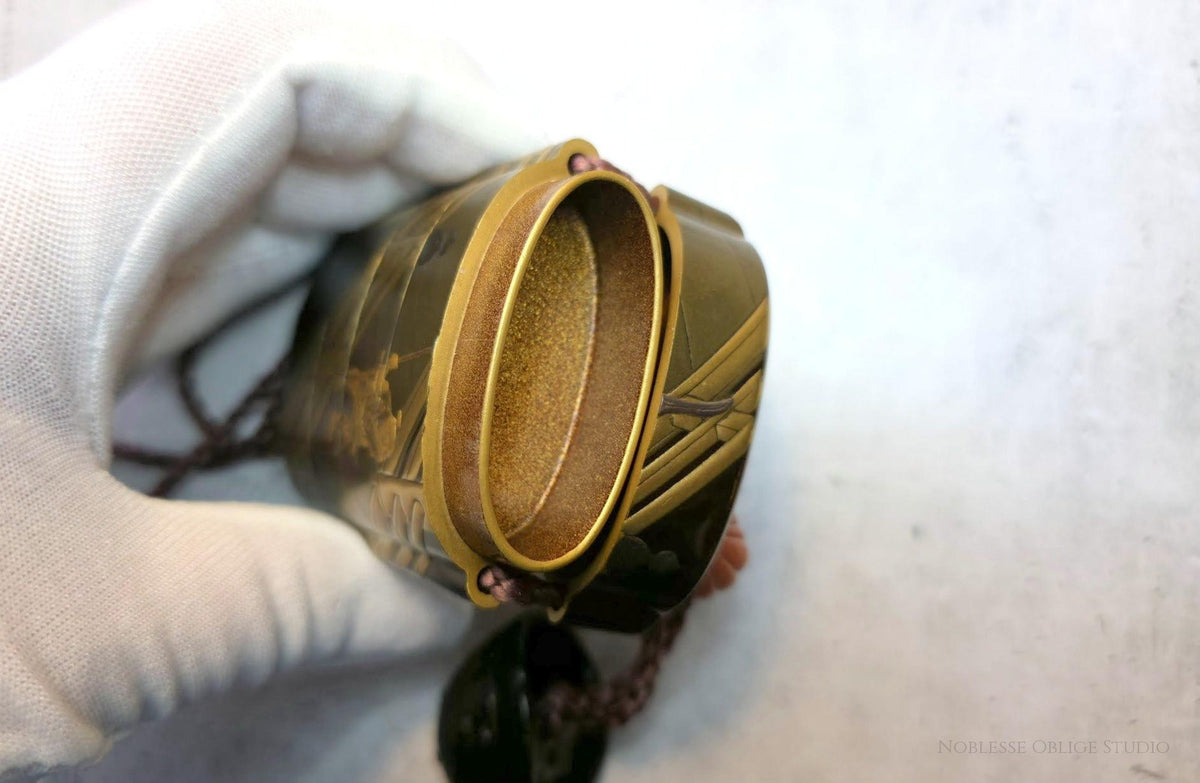
The interior surfaces are finished in nashiji, a gold-sprinkled lacquer technique traditionally reserved for higher-quality inrō, underscoring the level of craftsmanship and confirming that this piece was produced in a skilled workshop rather than as a later factory or export item.
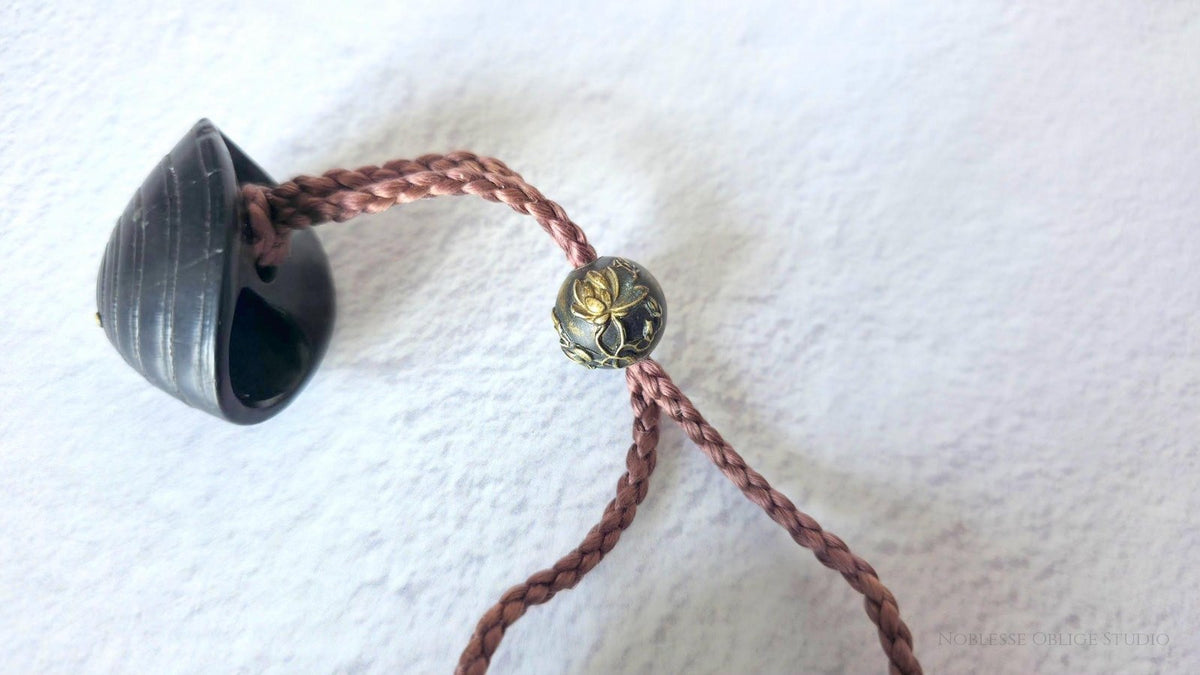
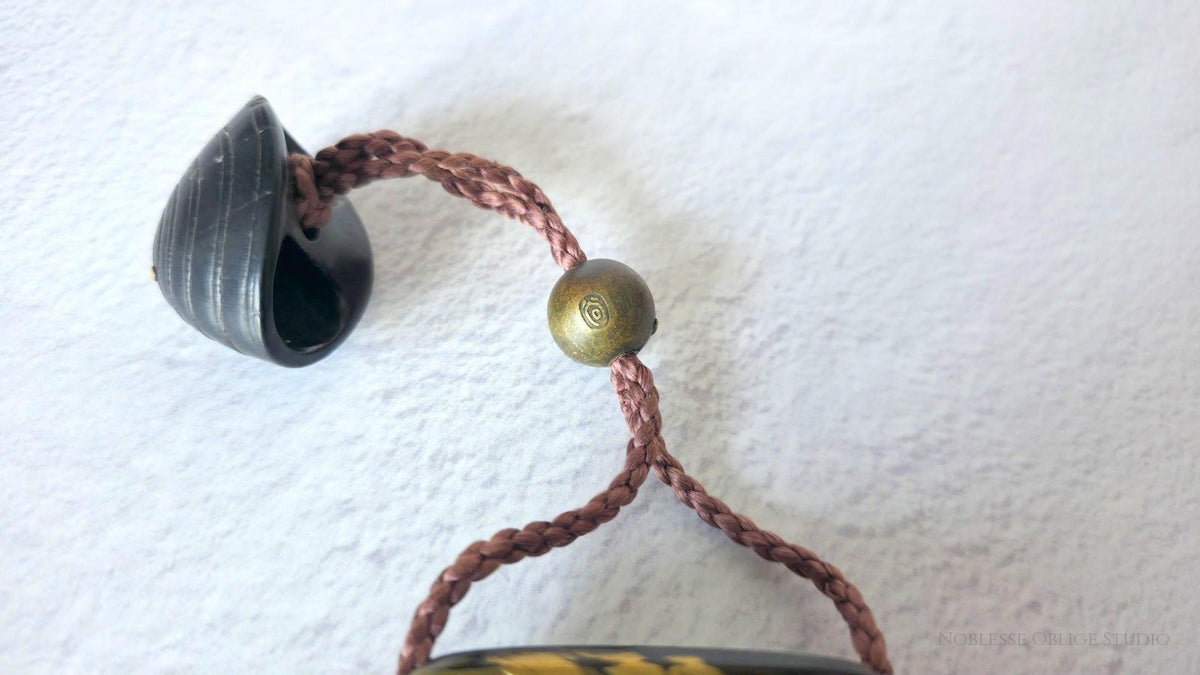
The ensemble is completed with a signed antique bronze ojime—the small sliding bead used to secure the cord—formed as a lotus flower and dating to the Meiji period, together with a wooden netsuke, the small toggle that anchors the inrō over the kimono sash. The netsuke, carved in the form of a straw hat with a contrasting inlay, alludes to the traditional New Year’s Setsubun ritual, during which beans are thrown to ward off evil spirits; in classical imagery, a demon is often shown sheltering beneath such a hat, here suggested in a restrained and elegant manner.
The quality of the lacquer work, the narrative complexity of the design, and the refined overall execution suggest that this inrō was likely made for an educated townsman or a member of the samurai class, rather than for the later tourist or export market.
Presented as a complete and harmonious ensemble, this inrō would make an exceptional gift for a discerning individual—particularly someone for whom finding something truly distinctive is a challenge—as well as a meaningful addition to a serious collection of Japanese art.
Details:
Origin: Japan
Period: Late Edo – Early Meiji period (circa 1800–1880)
Form: Five-case inrō
Materials: Wood, urushi lacquer, gold maki-e, silk cord
Dimensions:
Inrō: 75.5 × 55.5 mm
Ojime: 14.5 mm
Netsuke (straw hat): approximately 40 × 22.5 × 27.5 mm
Total weight: 60 grams
Condition:
Very good antique condition, with gentle surface wear and softening of the lacquer consistent with age and traditional use. No structural damage observed; the sections fit well, and the decoration remains clear and well-preserved.
The cord appears to have been replaced at a later date, as is commonly the case with inrō; all other elements remain period and authentic.